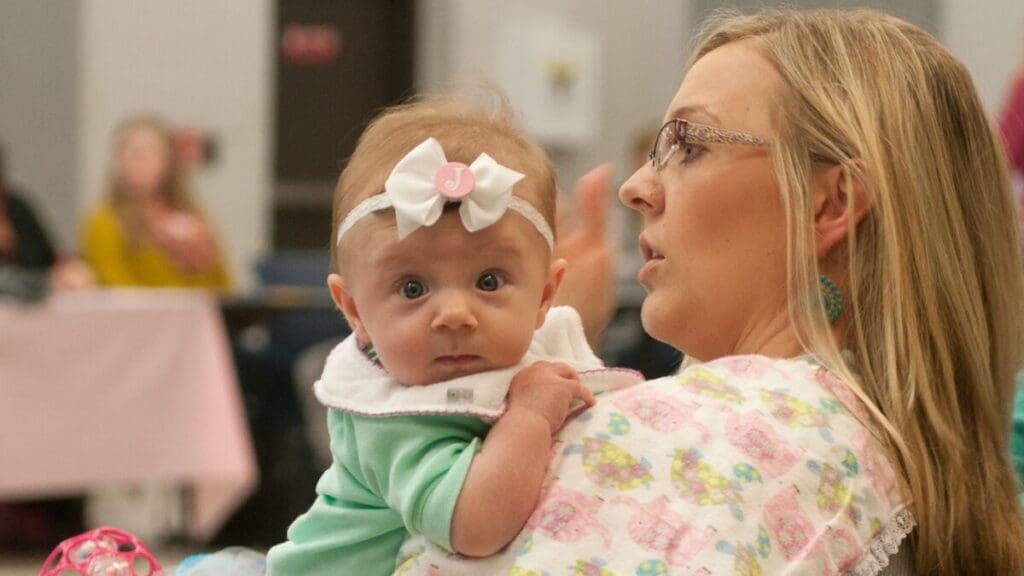
Endow – which stands for Educating on the Nature and Dignity of Women – creates small-group gatherings of women who read aloud, reflect on study themes, and speak honestly about living out their faith, without the pressure of weekly homework.
—
In today’s internet world, it often seems people are more likely to meet on their phones than to meet in person.
Although new technology has enabled people to be more in touch with each other, rates of loneliness are reaching the highest levels in history.
This can also hurt Catholic women – and Endow is trying help them have true relationships.
Endow – which stands for Educating on the Nature and Dignity of Women – creates small-group gatherings of women who read aloud, reflect on study themes, and speak honestly about living out their faith, without the pressure of weekly homework.
Their latest publication helps women study Pope St. John Paul II’s Letter to Artists, which came out in 1999.
“There seems to be an assault on beauty in our culture,” said Annette Bergeon, CEO of Endow.
“Art is getting ugly—think of urinals in museums or soulless buildings. We used to have gorgeous architecture and now so much feels chaotic and devoid of harmony,” she said.
Drawing from John Paul’s Letter to Artists, an eight-chapter study invites women to rediscover and reclaim beauty, art, and culture as doorways to God. It also offers practical ways to live out the gift of creativity through relationships, work, service, and prayer.
Staff from Endow spoke to Crux Now about their work, and why they chose John Paul’s Letter to Artists for their latest endeavor.
Crux Now: this came out over 30 years ago when I was, in my twenties. And the world has changed a lot. The art world has changed a lot. Why is a 30-year-old document a good place for women to meet?
Terri Sue Monark, Director of Content: The letter was written in 1999, just before the explosion of social media, AI, digital content creation, influencers, [ten years before Instagram launched]. It seems like he already saw this deeper crisis coming. It wasn’t a crisis of our ability to produce or create things or even about technique, but more of a crisis of meaning.
Endow’s study on Letter to Artists is so important because it’s really helping us reflect on questions like why are we creating, what is beauty and what is beauty for? Does art point beyond ourselves? And if so, what does that mean? How does it help elevate us?
John Paul II was concerned with our culture losing this shared understanding of truth, of beauty, of goodness, of a vision of a human person rooted in dignity because a lot of art that’s created now has this shock value–they’re just churning it out for clicks. There’s no meaning behind it. And so, John Paul II is reminding us that beauty is not decorative. It is essential.
Annette Bergeon, CEO: I think that John Paul II was very prophetic when he wrote it 30 years ago along with another of his letter’s [from 1995], Letter to Women, which is the document that really launched the Endow apostolate. If you read what he wrote in Letter to Women, with everything that’s happened, the confusion in our culture around what it means to be a woman and what is really a crisis of identity, it almost seems like he wrote the Letter to Women for our time today. When I read the Letter to Artists, I see the exact same thing.
John Paul II in 1999 saw that beauty was becoming unimportant in our culture, in our society and that it seems that our modern culture only values utility. Once something is not useful anymore, then it has no value, whether that’s a human person or a beautiful piece of art. John Paul II knew that art calls us to the transcendent, and that the loss of beauty and the loss of beautiful art was going to inhibit the average Catholic Christian person, the woman and man in the pew, or even the average human being, from encountering God in this way.
One of the things that he said in the document in section 10 was that the church hopes for a renewed epiphany of beauty. He was calling for the church to demand beautiful things and to bring beauty back. I don’t think we’ve seen that epiphany. I think that epiphany still needs to come and that’s one of the reasons why Endow felt it was so important to put this document into the hands of women.
You talk about the importance of this document and how women need to know this attitude towards beauty. How does Endow work? How do you do that? It sounds like that’s a great idea, but what does it look like?
Monark: You may have seen that Endow stands for Educating on the Nature and Dignity of Women. We call women together, inviting women of all ages, middle school, high school, adults, to gather in small groups. They meet in homes, parishes [and online]. We invite them to engage with these great female Catholic Saints and doctors of the church and with these really important documents that they may not otherwise read. We create this on-ramp, an accessibility, to these truths of our faith. We do it in community, we do it in friendship. This happens through shared guided reading and discussion, and that’s where our study guides come in.
Each study session lasts about an hour and a half to two hours. Each chapter begins and ends in prayer. You do one chapter per session. The women take turns reading the text out loud so that they’re really proclaiming the truths of our faith aloud together. They’re inviting the Holy Spirit into the study, which walks them through the actual text and through thoughtful commentary to help them unpack what they’ve read from the Pope or a doctor of the church.
There’s discussion questions peppered throughout so that the conversation really unfolds naturally. These questions really help women connect what they’re reading to their own lives. Why does this matter for me? Why does this matter for me now?
Every group has a host. We don’t really have teachers or leaders, but there is a host or co-host who invites the women together. They gently facilitate the discussion to stay on track.
One thing unique to Endow is that it really honors their intellect. It’s text-based, discussion centered, and honors that intellect. It stretches women maybe a little bit farther than they’ve gone before. There’s no homework, there’s no prep to do beforehand. The reading happens together, which makes the church’s most important truths and teachings accessible, but it doesn’t simplify them.
Bergeon: First of all, the read aloud method is truly one of the geniuses of Endow because it creates an incarnation experience of hearing the words of Pope John Paul II or hearing the words of St. Theresa of Avila or one of the doctors of the church.
So you’re hearing it aloud in a community. You’re reading along and it asks women to contemplate the important questions of life that, in the hustle and bustle of our busy lives, we don’t always have the opportunity to come together with other women and talk about the things that matter the most.
What Endow does is it presents women with philosophy and theology and asks them, how is this relevant to their lives? It asks them, how does this influence the myriad of choices that we make every single day, whether it’s how we spend our time, how we spend our money, how we raise our children, what we choose to pursue for a career.
By prompting women in community to start asking these important questions, you find the answers. Jesus said in the Sermon on the Mount, ask and you will receive, seek and you will find, knock and the door will be opened Just by prompting women to ask these questions, Endow enlivens their faith.
Women start to find those answers to the important questions that maybe they had even forgotten to ask. They find those answers and they find their role. Very often they find their personal vocation because God has an assignment for every single one of us. Often we don’t even know what to ask God, what is it that you want me to do?
In an Endow group, that becomes part of the daily conversation. Just by asking those questions, women find their purpose. They find that role of how God wants them to help build the kingdom. It activates them in a way that’s really beautiful, transformational and has a significant impact on their families, their parishes, their communities, even their workplaces.
Monark: Endow is for every woman. It’s for that woman who may be a new Catholic, maybe she just went through OCIA. Endow is also for the Cradle Catholic, the well-formed Catholic. And what I have loved to see is a group of women come together who are in all of those stages of their faith journey, and it becomes this really rich conversation.
They’re the newer Ca